
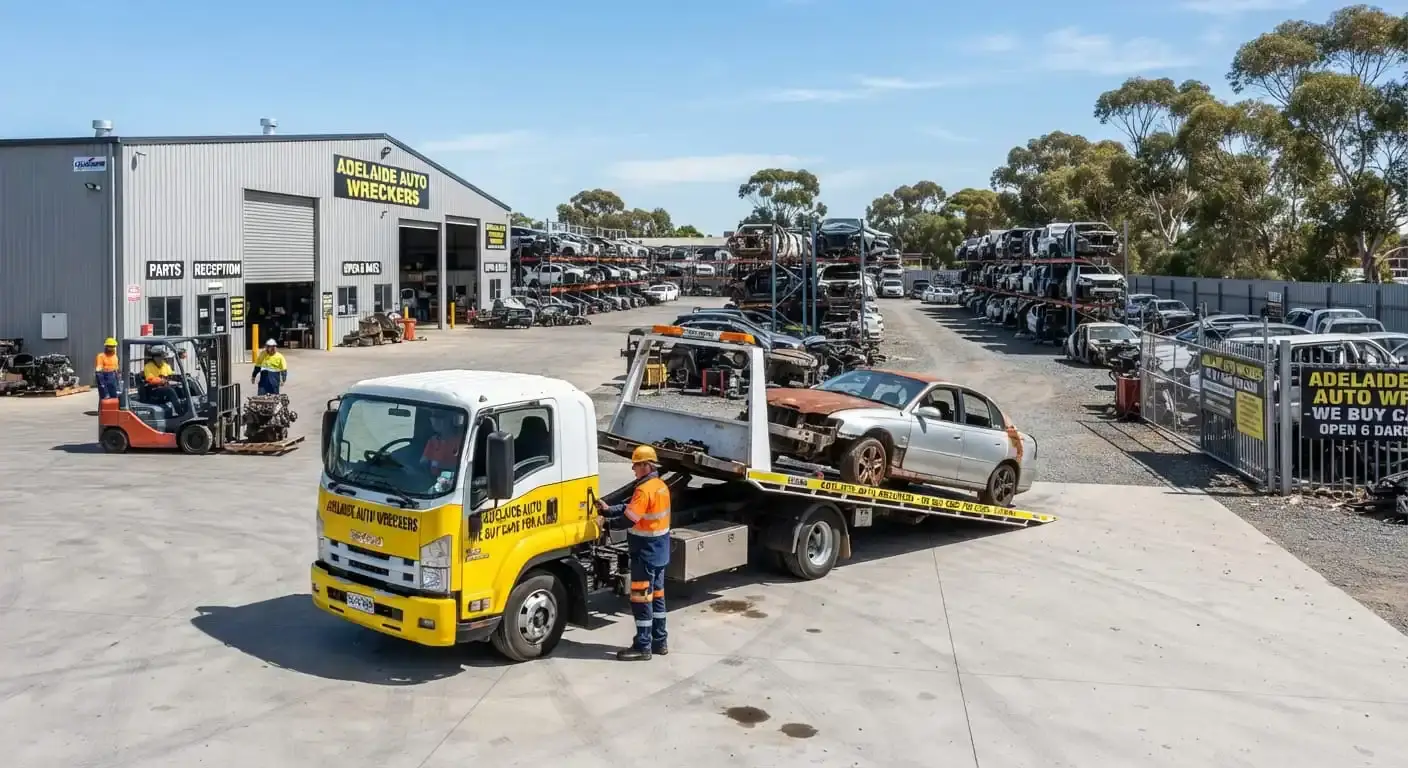
Have you ever wondered what happens to your car once you send it to a car removal facility? The car which had accompanied you for the past thirty-five years, currently could be surrounded by scary strangers while they hover over your car and “unbox it” part by part?
Okay, maybe it isn’t quite as dramatic, though your car might go through the five stages of grief as it processes that you finally let it go. In reality, your old vehicle carries hundreds of useful parts, minerals, and metals that can be carefully dismantled, reclaimed, and used to build new cars. This blog explores the scrap car dismantling process and how Adelaide facilities turn old rides into eco-friendly resources.
Stage One: The Hardest Farewell
Wayne, 52, from Campbeltown finally lets go of his scrap car after twenty years, that too hearing about a nearby garage sale. It wasn’t an easy decision though—how can you let go of a car that had rusted, cracked a window and a door which had been hanging on dear life for the past decade after all this time? But being the bigger man, Wayne swallowed the bitter pill, and finally entrusted his car to Best Car Removals Adelaide after an hour of negotiation, got the money transferred and suddenly the heartbreak didn’t sting quite so much. With a fresh wad of cash in his pocket, Wayne bought a used car from the Facebook Marketplace—It was probably one of the smartest financial decisions he had made all year.
The crew confirms the following point:
- Identification: Technicians check the Vehicle Identification Number (VIN), registration details, and proof of ownership to ensure the car is legally cleared for dismantling and not stolen or under active finance.
Stage Two: The Free Tilt-Tray Tow to the Facility
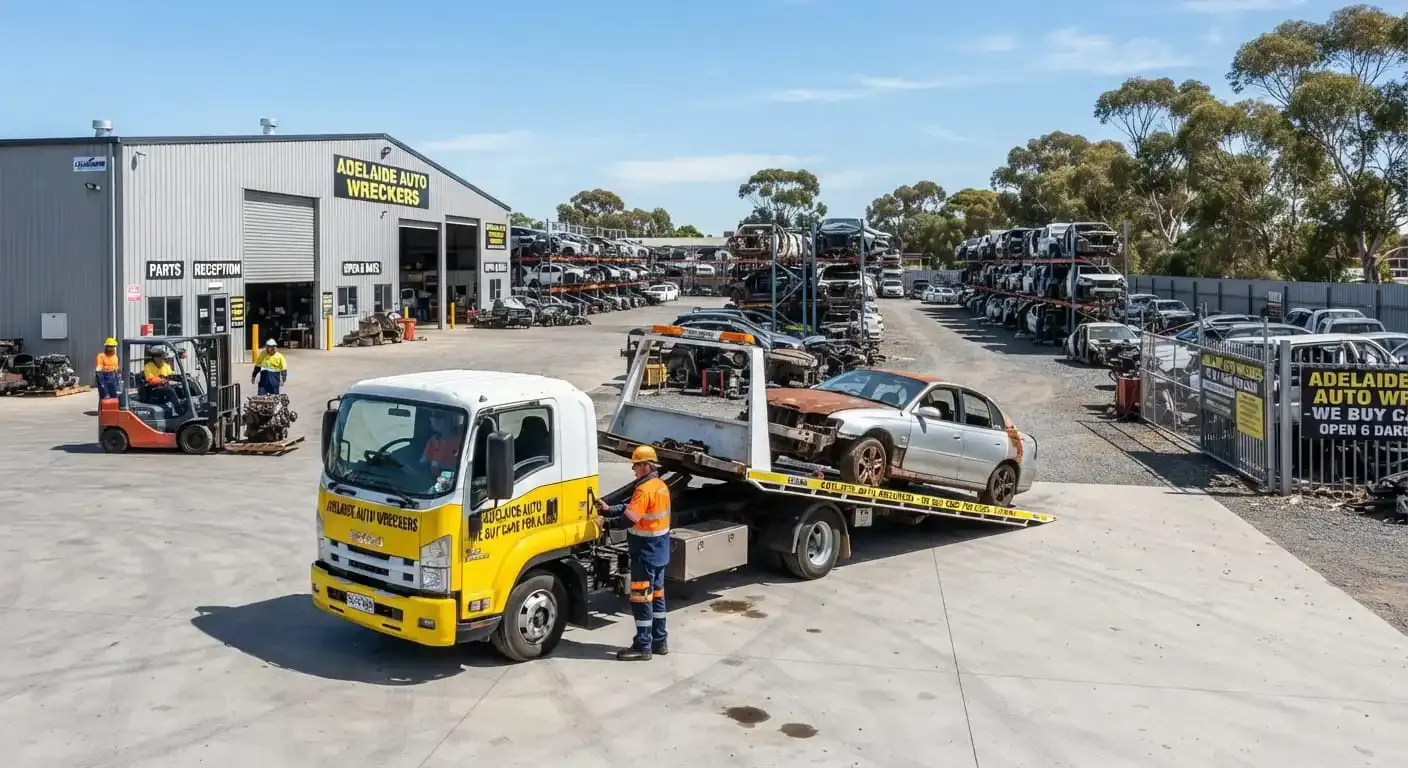
Wayne’s car is safely loaded onto the flatbed tilt-tray truck, and the driver heads out toward the facility. Up in the cab, the removal crew sips their coffee and shares a quick laugh over the car’s worn-out condition—joking about the “great suspension” and the “built-in ventilation” from the cracked window. Giving the old car a good-natured send-off, they transport it smoothly (even from an apartment basement) across town—completely free of charge—straight to the dismantling facility.
Stage Three: The Preparation to Dismantle
Wayne’s car is unloaded from the truck and brought to the OR of vehicles. The crew puts on their masks, gloves and does a long stretch before beginning the open heart surgery—or in this case—open engine surgery of the car. To keep it eco-friendly for the environment, the crew takes the following steps as they begin to disassemble the vehicle:
- Dismantlers inspect the vehicle to identify high-value, reusable mechanical and body components (such as engines, transmissions, alternators, mirrors, and doors) that can be salvaged and resold as used spare parts.
- Before any heavy cutting / crushing operations are started, this vehicle is taken to a closed bunded dismantling bay with a concrete floor surface to minimise vehicle leakage.
- Battery & wheels removal: At first, the battery is removed (lead-acid) as it removes the risk of electrical fires. Alloy and steel rims are separated, wheels and tyres are able to be removed and rubber are sent out for crumb recycling.
- Nearly, 100% of fluids are recovered and taken to a different sealed containment tank.
- All fluids such as engine oil, transmission oil and differential fluid are changed regularly.
Stage Four: The Dreaded Dismantling Bay
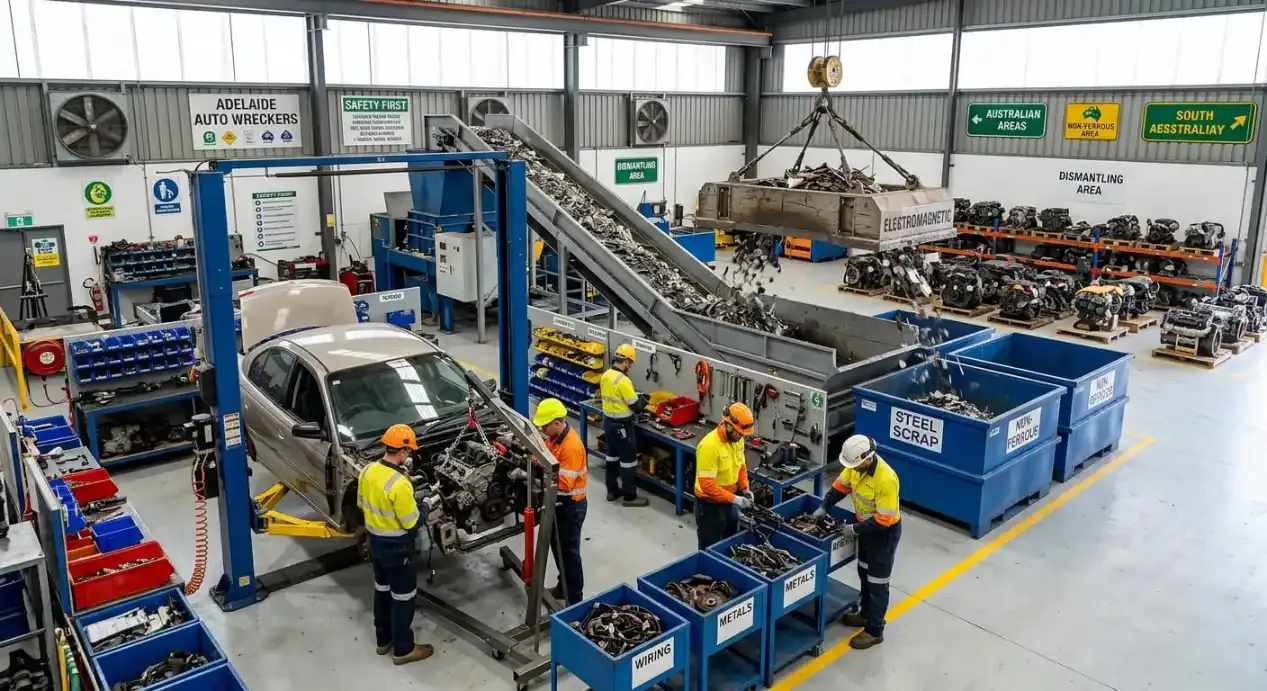
During this process, technicians strip down the vehicle from its exterior to its core and obtain useful car-parts and valuable metals inside. This process is less like a psychotic doctor movie scene but like a high-precision recycling line where nothing salvageable goes to waste. The following steps are taken to dismantle it layer by layer:
- Exterior & Body Panels: Doors, hoods, bumpers, and intact glass are unbolted and inspected to sell again as quality used parts are bought often.
- Engine & Drivetrain: The engine, transmission, and radiator are taken out, tested for their current working condition, and sorted for either refurbishment or metal recovery.
- Interior & Electronics: Seats, dashboards, wiring harnesses, and onboard electronics are removed to save working components and recover valuable copper wiring.
- Catalytic Converter & Exhaust: The catalytic converter is detached so precious metals like platinum, palladium, and rhodium can be safely extracted and refined.
- Bare Shell Separation: Once stripped to its frame, the remaining steel and aluminum body is sorted and prepped for shredding and smelting into new raw materials.
Stage Five: Crushing, Smelting & Shredding
This is where Wayne’s car gets a real technical turn—once the car is stripped down to just a metal skeleton, it is fed into an industrial crusher and shredder; where heavy-duty machinery flattens and breaks this frame down into bite-sized pieces of scrap metal easier for further steps like melting and molding. This process uses giant, industrial-level magnets that separates metal components like aluminum, copper and steel from the recovered part. After they are sorted, they are placed in heavy-duty smelters to be melted down and given a new chance at life—converting them to new materials later on. This means Wayne’s car could be used in a brand new vehicle, and could be back on the road soon.
The Eco-friendly Factor
- Clean and sorted scrap metal is sent to foundries where it is melted and cast into new industrial products, reducing the need for environmentally damaging raw mining.
- Any remaining non-metallic residue is processed for energy recovery or specialized recycling, ensuring as little as possible ends up in a landfill and saves the environment from being further polluted.
Stage Six: Remoulding into Something New
Once the metals leave the dismantling bay, they are repurposed inside high-temperature furnaces, the shredded steel and aluminum from Wayne’s old car are melted down, purified, and poured into fresh molds. Instead of rusting away in a landfill, that same metal is reshaped into brand-new components; ranging from car body panels and engine parts to household appliances and construction beams, making it a looped process which could be recycled and remoulded over and over again without losing its original quality.
Examples like rubber tyres could be turned into road asphalt, aluminum engine blocks could be reused as bicycle frames or engine components, copper wirings could be reconditioned as electrical motors—and just like that Wayne’s unwanted car is suddenly high in demand!
Stage Seven: Documentation & Eco-Certification
As the process comes to an end, we can not forget the most crucial part—paperwork. Rather than leaving Wayne stuck in a mess of government forms or worrying about future liabilities, Our team at Best Car Removals Adelaide, handles the final sign-off and officially closes the book on his old ride. The following documentation listed signifies the final closure of a recycled vehicle.
- Certificate of Destruction (CoD): The facility issues an official record confirming the vehicle has been safely and legally dismantled/recycled, permanently removing it from the road.
- Deregistration & Plate Return: Information or direct involvement in registering the vehicle, or in turning in its license plates, to avoid additional tolls, insurance or taxes to the owner.
- Environmental Compliance Sign-Off: A final audit log ensuring all dangerous, environment-polluting fluids, batteries, and metals were processed in strict accordance with green recycling standards of Adelaide.
And just like that, the once unwanted scrap car got recycled while following all environment-friendly standards, and got Wayne a good share of money as well. What are you waiting for? Contact Best Car Removals Adelaide today to get rid of your scrap car today!