
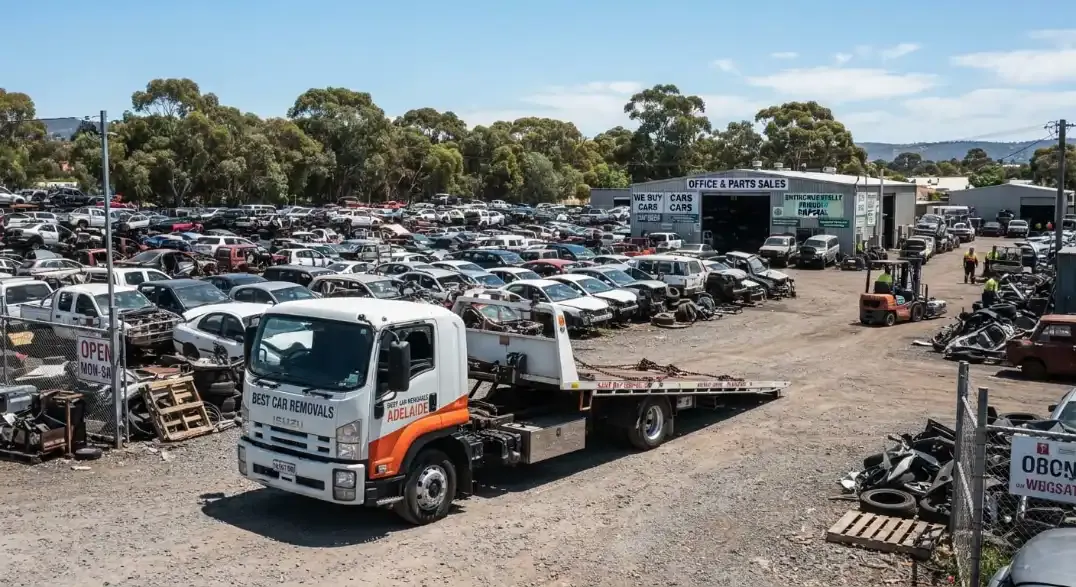
The time for many car owners is the moment they are saying goodbye to an old, damaged or a car that is no longer running. The tow truck comes to pick the car up, the forms are filled out, a few bills are exchanged, and the car is towed away into the distance. This can be seen as a journey to the ends of the earth; a final trek to a musty graveyard of old, rusty steel.
But in today’s South Australia, once a vehicle leaves the assembly line, it embarks on a complicated, complex and highly impactful environmental journey.
Once you select the professional Adelaide car removal service which focuses on sustainability, your vehicle is not just stored in landfill. Rather, it goes into the circular economy via advanced auto recycling. This can reduce waste, prevent the loss of valuable natural resources, and greatly reduce the carbon footprint involved in production of new materials.
Let’s peek inside the hood and see what’s really going on inside your car once it leaves your driveway, and how it turns into a new way to make some materials more eco-friendly.
Phase 1: Depollution & Extraction of Hazardous Fluids
The vehicle will be depolluted, or detoxified, before it can be torn apart or crushed. Today’s cars are sophisticated systems containing many chemical compounds, heavy metals and unique fluids. These materials can cause serious harm to Adelaide’s sensitive local ecosystems, such as the underground waterways and soil quality, if not properly managed.
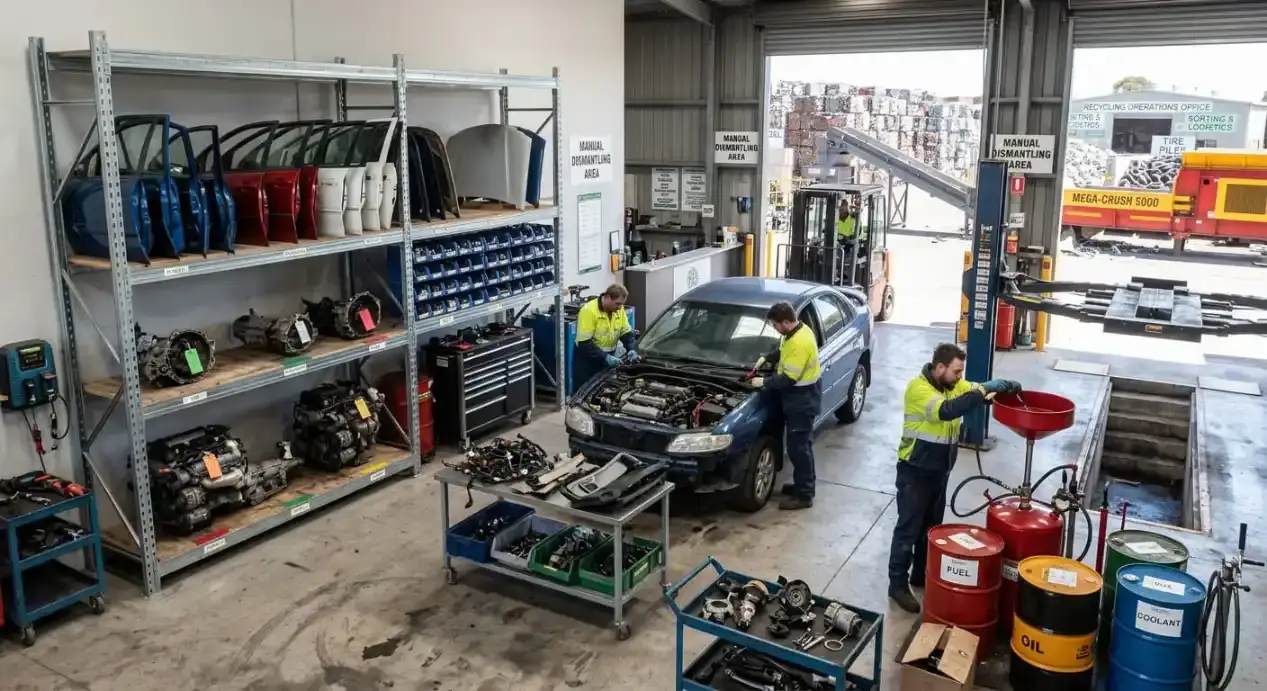
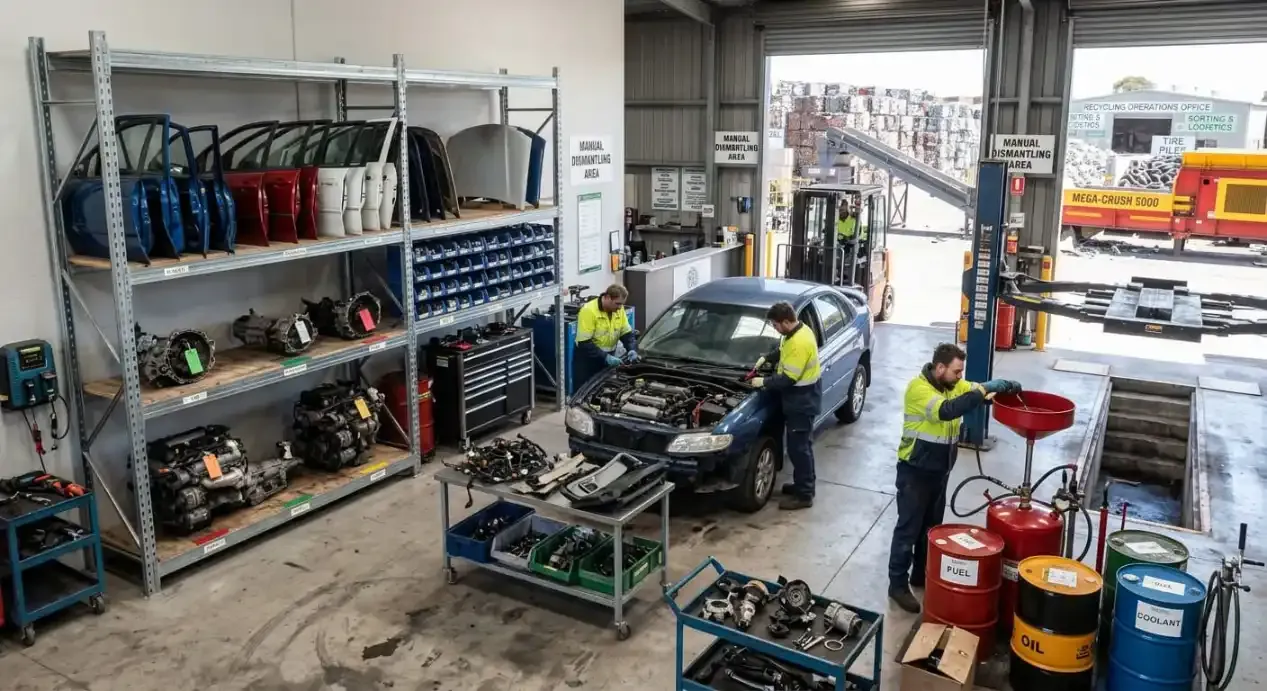
Technicians are able to, at the moment your vehicle arrives at the licensed recycling centre, carefully drain and isolate all hazardous fluids:
- Engine Oil and Transmission Fluids: These fluids are gathered in a separate leak-proof holding system. They are subsequently cleaned further, and redefeined for industrial applications or converted to high quality fuel oils.
- Engine Coolants/Antifreeze: Ethylene glycol, the main ingredient in engine coolants/antifreeze, is extremely toxic to wildlife and domestic animals because of the sweet taste. These fluids are then distilled and cleaned when they are recycled to be safely re-used in mechanical systems.
- Brake and Power Steering Fluids: These glycol-ether and mineral based fluids are carefully removed from the vehicle to ensure that any potential for accidental chemical spills are eliminated.
- Fuel Recovery: All petrol and diesel is siphoned from the area. If the fuel is clean, it can be filtered and then sent to fuel the facility’s own fleet of tow trucks and machinery.
Auto recyclers remove these liquids first, systematically, ensuring that the remainder of the structural dismantling work is completely pollution-free, before any toxic run-off ever reaches the soil of South Australia.
Phase 2: Disassembly & Recovery of Working Parts
Now the vehicle is dry and safe to be handled, the dismantling process starts. This is a step that combines precision of mechanism with structure. A car that is a total loss after a great big crash is not completely useless; there are often many hundred perfectly working parts that are still in the car.
The vehicle is carefully assessed by expert dismantlers for the recovery of valuable, working Original Equipment Manufacturer (OEM) parts. They are cleaned, quality checked, cataloged and added to the second-hand auto parts market.
- Mechanical Parts: Alternators, starter motors, water pumps, steering columns and even complete engines or transmissions are frequently repaired. The intensive use of energy needed to create new parts from raw steel and copper is avoided by reusing these parts.
- Electrical Systems and Batteries: Leaded batteries with sulfuric acid are found in large amounts in car batteries. These are forwarded to specially designed processing facilities where almost 99% of the components in the batteries can be melted down and reused to make new batteries. High demand and recyclability of copper is also a reason for extracting precious copper wiring harnesses.
- Exterior and Interior Trim: Drivers looking for a safe, budget-friendly match to replace their damaged car body panels, doors, mirrors, alloy wheels and interior seats can access this range.
This stage represents the essence of the circular economy - maximising the use of products and materials for as long as possible and then returning them to raw material.
The Next Phase: Shredder and Advanced Material Separation Phase
Once all the moving components are removed, the remaining parts are the skeleton of the car, made of structural steel, iron, aluminium, plastics and glass. To ensure efficient transportation, the car is then transported to a heavy duty industrial baler, where it’s compacted using hydraulic presses to form a cube or flat sheet.
The compressed car is then transported to an industrial shredder. In seconds, it’s broken up to a fist size by the impact of large and powerful rotating hammers.
What comes out of the shredder is a jumbled mass of materials. Recycling plants use special separation technologies to understand this trash:
- Magnetic Separation: Large high intensity magnetic drums roll under the shredded material and grab ferrous metal such as iron and structural steel. One of the most valuable commodities recovered during this process is steel: It can be reused without losing any of its properties, and is 100% recyclable.
- Eddy Current Separation: The Eddy Current Separation process separates non-magnetic metals, like aluminum doors, brass fittings and copper radiative cores, by using alternating magnetic fields which repel non-ferrous metals, propelling them to individual collection bins.
- Automated Optical Sorting: Using advanced sensor systems, infrared light helps to separate various types of industrial plastic and glass components and sorts them out from the residual materials.
The residue is what remains behind, typically known as automotive shredder residue (ASR) or ‘car fluff,’ containing minute amounts of textiles, rubber and broken glass. New technologies are continually emerging to repurpose this small percentage of waste for other fuel or waste-to-fuel applications or as an aggregate additive in road construction.
The Broader Environmental Impact for South Australia
Recycling just one car has a positive impact on a huge global impact on the environment. Changing to an eco-friendly car removal service in Adelaide is a proactive step towards reducing climate change and habitat destruction.
Saving Energy & Cutting Emissions
Processing iron ore, bauxite (for aluminum) and fossil fuels to manufacture new materials for use in vehicles consumes tremendous energy. The energy required to recycle steel into usable structural steel is about 75% less than the energy needed to make it from scratch. The savings are even greater for aluminum, up to 95% less energy. This is an extraordinary decrease in the dependence upon energy, which directly means a decrease in global greenhouse gas emissions.
Protecting Natural Landscapes
By recycling one ton of steel, the earth can save about 1.1 tons of iron ore, 630 kilograms of coal and 54 kilograms of limestone. One ton of steel saves about 1.1 tons of iron ore, 630 kilograms of coal and 54 kilograms of limestone from the earth. You lessen the economic pressure for the use of intensive open-cut mining, protecting natural habitats, forests and natural landscapes from industrial disruption.
Choices That Make a Difference
Not every car removal company is environmentally responsible. If you do need to let go of your car, it is crucial to work with a reputable auto removal provider that clearly outlines their recycling processes. Responsible operators cooperate with licensed and certified salvage yards which follow rigorous South Australian environmental protection regulations.
Choosing an eco-friendly car removal service means that your car’s final journey is one of transformation.
Your scrap asset fetches a fair price, your property is free of an unwanted eyesore and the planet benefits from a clean, efficient and much-needed recycling cycle. The old car you filled up a lot of space in your driveway becomes the components of the sustainable infrastructure of the future.